

Gold-Backed Cryptocurrency Alternatives: Goldbacks and Other Ways to Own Gold
Quick Answer. The main gold-backed cryptocurrency alternatives are Goldbacks, physical bullion coins and bars, allocated vaulted gold, gold ETFs or trusts, and digital gold accounts that use no blockchain. Each changes what you own and what has to keep working for you to access it. Goldbacks provide direct physical gold ownership without requiring a cryptocurrency wallet or financial account.
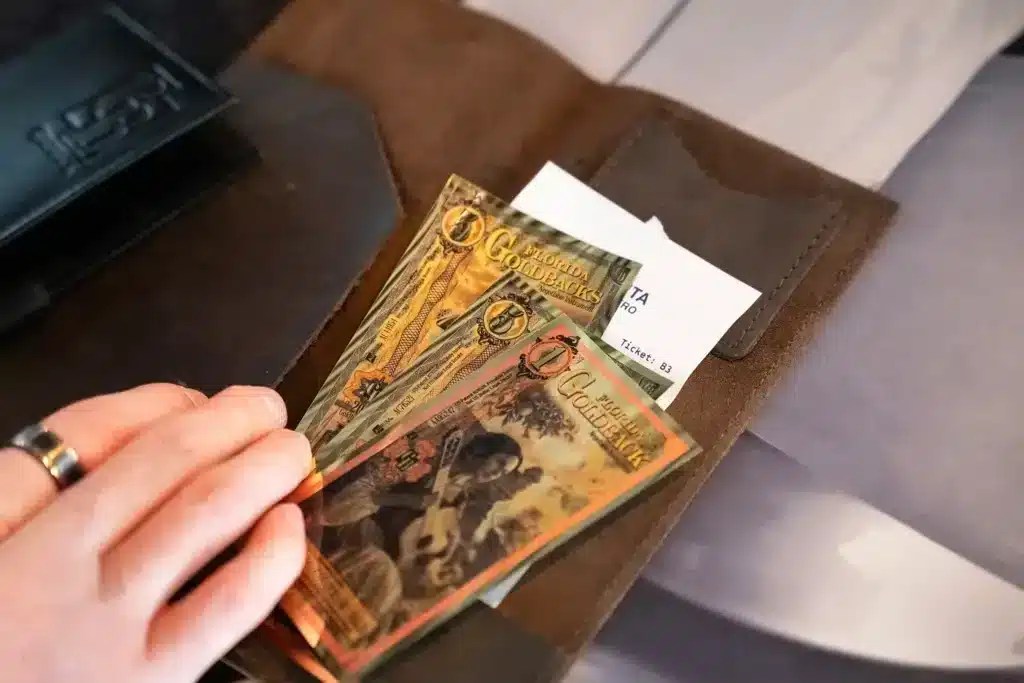
Anyone comparing gold tokens is usually asking a simpler question underneath: what is the most practical way to own gold? Tokens answer part of it. They divide finely, they move in minutes, and they settle without a courier.
They also add parts. A token comes with an issuer, a custodian holding the metal, a blockchain recording who holds what, a wallet you have to secure, a redemption policy the issuer writes, and a platform where you buy and sell. This guide covers five ways to own gold that skip some or all of those parts and what each one gives you in return, starting with Goldbacks.
Key Takeaways
- "Gold-backed" covers four different things: physical ownership, beneficial ownership, token ownership and price exposure.
- A gold token adds an issuer, a custodian, a wallet, a blockchain, fees and a redemption policy.
- Goldbacks provide direct physical 24K gold ownership without requiring a cryptocurrency wallet or financial account.
- Fractional denominations let Goldbacks be held, exchanged or spent in everyday amounts.
- Allocated vaulted gold can provide title to specific bars; unallocated gold is a contractual claim on the provider.
- No option removes every risk. Choose by how you plan to use the gold.
What is a gold-backed cryptocurrency?
A gold-backed cryptocurrency is a blockchain token whose issuer states that each unit represents a set quantity of gold held in a vault. You hold the token in a wallet, a custodian holds the metal, and the issuer decides whether tokens can be exchanged for physical gold and on what terms.
PAX Gold (PAXG) is one example that can be checked against a primary source. Paxos states that each PAXG token is backed by one fine troy ounce of gold meeting London Good Delivery standards, that the gold is custodied in LBMA vaults, and that it publishes monthly attestation reports. Those are the issuer's own disclosures rather than independently verified facts, and terms change, so read the current documentation before relying on them. Other gold tokens exist, with different backing, custody, attestation and redemption arrangements. This guide names only what can be checked against a primary source.
Four things get called "gold-backed"
Keeping these apart makes almost every comparison easier:
- Physical ownership. The gold is in your hand or in storage you chose. Nothing has to be redeemed for you to have it.
- Beneficial ownership. Specific bars are held in your name by a vault operator. You own those bars; someone else stores them.
- Token ownership. You own a unit recorded on a blockchain, and an agreement behind it points at gold held elsewhere.
- Price exposure. You own a security or an account balance that follows the gold price. Metal sits somewhere in the structure, but receiving it was never the arrangement.
Why consider an alternative?
People look for an alternative when the token wrapper adds more than it solves. Four practical reasons come up repeatedly.
- Private-key loss can be permanent. The SEC's guidance for retail investors is blunt: a private key cannot be changed or replaced, and if you lose it you permanently lose access to the assets in that wallet.
- Third-party custody carries its own exposure. The same guidance notes that if a third-party custodian is hacked, shuts down or goes bankrupt, you may lose access, and it tells investors to check whether the custodian insures against loss or theft at all.
- The familiar safety nets do not apply. There are no protections for accounts held with crypto asset entities comparable to FDIC or SIPC coverage.
- Redemption is a policy, not a right you set. Thresholds, minimum quantities, fees and eligibility are written by the issuer and can be revised.
None of this makes gold tokens a poor idea. Digital transferability and fractional access are genuine advantages, and for someone moving value between exchanges they may be the whole point. The question is narrower: do you need those, and what are you accepting to get them?
The five alternatives at a glance
Each option answers a different question, so the useful comparison is what you own and what has to keep working for you to access it. The table below sets the five side by side.
| Option | What you own | Everyday spendability | Who holds the gold | Principal limitation |
|---|---|---|---|---|
| Goldbacks | Direct physical ownership of 24K gold, in fractional denominations | Handed to a cashier at participating businesses, with no cryptocurrency wallet or blockchain required | You | A premium over spot; acceptance is strongest in state-series areas |
| Bullion coins and bars | Gold coins or bars | Rarely; usually sold rather than spent | You, or a vault you choose | Unit sizes are large for small purchases; resale spreads |
| Allocated vaulted gold | Title to specific bars | No | A professional vault, on your behalf | Storage costs; access depends on the provider and the account terms |
| Gold ETFs or trusts | Shares in a trust that holds gold | No | The trust's custodian banks | Ordinary shareholders exit for cash, not metal; annual expenses |
| Digital gold accounts | A recorded holding, allocated or pooled | Only where a linked card exists, and it settles in currency | The provider's vault partner | Provider and platform dependency; confirm whether the holding is allocated |
Where Goldbacks fit
Goldbacks provide direct physical gold ownership without requiring a cryptocurrency wallet or financial account. That is a different design goal from a token, which is built to move gold value across a network, and it is why the two often come up in the same search. A Goldback is a voluntary, hyper-fractional gold currency, holding a defined quantity of 24K gold bonded between polymer layers by Valaurum. It circulates under a voluntary, local-currency model that isn't government-backed.

What that combination makes possible:
- Direct physical ownership. The gold is in your hand. Holding or spending a Goldback does not require a cryptocurrency wallet, a blockchain or a financial account.
- Fractional denominations. Eight denominations are active, from 1/4 up to 50. The 1/4 holds 1/4,000 of a troy ounce, which puts real gold into everyday amounts. The 100 was discontinued, though existing 100s remain valid and usable at participating merchants.
- Portability. Gold bonded between polymer layers sits flat in a billfold, so a meaningful amount travels without a case or a courier.
- Everyday spendability. Ten state series are live, and thousands of participating U.S. merchants accept Goldbacks handed straight to a cashier. They remain exchangeable and sellable through authorized distributors, so spending is an added option rather than the only one.
- Defined gold content. One Goldback contains 1/1,000 of a troy ounce of 24K gold, stated on the face of every piece rather than implied by a document.
- Verification you can do yourself. Four anti-counterfeit layers are built in: UV-reactive ink, serial numbers, crystallization patterns and raised imagery.
- Dated state artwork and published mintages. Each state series is dated with its own artwork, and mintage figures are published by series and denomination on the Goldback Safe.
The honest limits belong here too. Goldbacks carry a premium over the spot price of their gold, covering the manufacturing process, Valaurum's multi-layer anti-counterfeiting technology and the engineering that makes gold practical to spend. Unlike a coin or bar sold at melt value, a Goldback spent at a merchant returns its full premium as purchasing power. Merchant acceptance is strongest where the state series are established. They are one option among five, designed so that using them doesn't depend on a platform, an account or a network in between.
For the wider category and its history, what a gold-backed currency is covers the ground in full, and the beginner's guide explains how the currency works.
How the other gold alternatives work
The other four options differ more in ownership format, access and cost than in the gold behind them. Each is worth understanding, because each solves a problem Goldbacks are not designed for.
Physical bullion coins and bars
Bullion is priced off the daily metal price plus a premium, and you own the metal outright once you take delivery. Bullion generally carries a lower fabrication premium than highly fractional physical-gold formats. That is why it suits larger holdings.
The trade-offs are size and resale. A one-ounce coin represents too much value to hand over for a small purchase, and selling means finding a buyer and accepting a spread. The CFTC advises getting every fee, cost, commission and retail price in writing before you buy, and asking what the dealer's buy-back price would be if you sold tomorrow. That single question tells you more about a dealer than any brochure.
Allocated vaulted gold
Allocated gold is the closest thing to holding bars without storing them yourself. The LBMA describes an allocated account as backed by specific bars, documented by a weight list showing each bar's unique number, gross weight and assay. Allocated ownership generally reduces direct credit exposure to the provider compared with an unallocated account, subject to the custody agreement and applicable law.
Unallocated is the arrangement people mistake for it. An unallocated balance is a contractual claim on the institution rather than a specific bar, and a credit balance means the owner has credit exposure to it. Two accounts can both be described as "gold in a vault" and sit on opposite sides of that line, so it is worth confirming which one you are opening. Storage is charged either way, and the LBMA notes that an allocated owner is responsible for arranging their own insurance unless the agreement says otherwise. BullionVault, for example, states that its allocated storage costs 0.12% a year and includes insurance.
Gold ETFs and trusts
An ETF or trust converts gold into a security you can hold in a brokerage account, which is why it is common in retirement and brokerage portfolios. What you own is shares, not gold.
SPDR Gold Shares illustrates the structure. The Bank of New York is trustee, JPMorgan Chase Bank and HSBC Bank hold the gold as custodians, and the expense ratio is 0.40%. Shares are created and redeemed only in Baskets of 100,000 shares, and gold is distributed only to Authorized Participants in connection with redeeming those Baskets. An ordinary shareholder sells shares for cash. That is price exposure with professional custody, and it is a reasonable thing to want, as long as nobody is expecting metal at the end of it.
Digital gold accounts that are not blockchain tokens
These are online accounts where a provider records your holding in its own books rather than on a public blockchain. There is no wallet to secure and no private key to lose, and buying or selling small amounts is straightforward.
What replaces the blockchain is the provider. Your access depends on that company continuing to operate and on the vault partner behind it, and the terms decide whether you hold allocated bars or a pooled claim. Some accounts add a payment card, which lets you spend the balance, though a card purchase converts gold to currency at the point of sale rather than passing gold to the merchant.
Which option fits different use cases?
Start from what you intend to do with the gold, because that decides more than the metal price does. Matching the goal to the format:
- Owning gold you can also hand to a person or a business. Goldbacks are the one option here that combines physical gold ownership, portability, divisibility and in-person spending in a single format, in denominations small enough to use.
- Holding the most metal per dollar. Bullion coins and bars, if you are set up to store and eventually resell them.
- Keeping a large holding in professional storage with title to specific bars. Allocated vaulted gold, with the allocated-versus-unallocated question settled in writing.
- Gold price exposure inside a brokerage or retirement account. A gold ETF or trust.
- Buying and selling small amounts online without running a wallet. A digital gold account, after checking how the holding is recorded.
- Moving value quickly between exchanges and chains. A gold-backed token may genuinely fit, with the issuer, custody and redemption questions above answered first.
Costs, terms and availability differ by provider and change over time. This guide describes how the options work rather than what anyone should buy, contains no valuations or projections, and is not financial advice.
Frequently Asked Questions
What is a gold-backed cryptocurrency?
A gold-backed cryptocurrency is a blockchain token whose issuer states that each unit represents a set quantity of gold held in a vault. The token records ownership, a custodian holds the metal, and the issuer sets whether and how tokens can be exchanged for physical gold.
What are the main alternatives to gold-backed cryptocurrencies?
Five: Goldbacks, physical bullion coins and bars, allocated vaulted gold, gold ETFs or trusts, and digital gold accounts that use no blockchain. They differ in what you own, who stores the metal, what it costs to hold, and whether the gold can be used in person.
Are gold-backed cryptocurrencies the same as owning physical gold?
No. A token is a claim recorded on a blockchain that points at gold held by a custodian, so reaching the metal depends on the issuer's redemption terms. Owning physical gold means the metal is already in your possession or stored in your name.
What risks should you consider with tokenized gold?
Issuer and custody risk, since someone else holds the gold and defines redemption. Technology risk, because a lost private key cannot be replaced. Platform risk, since buying and selling runs through an exchange or app. And the absence of FDIC or SIPC-style protection on crypto asset accounts.
Can Goldbacks be used instead of gold-backed cryptocurrency?
For holding and spending gold in person, yes. Goldbacks are physical 24K gold in fractional denominations that can be handed to a cashier at participating businesses, with no wallet, blockchain or platform involved. They do not transfer over a network, which is what a token is designed to do.
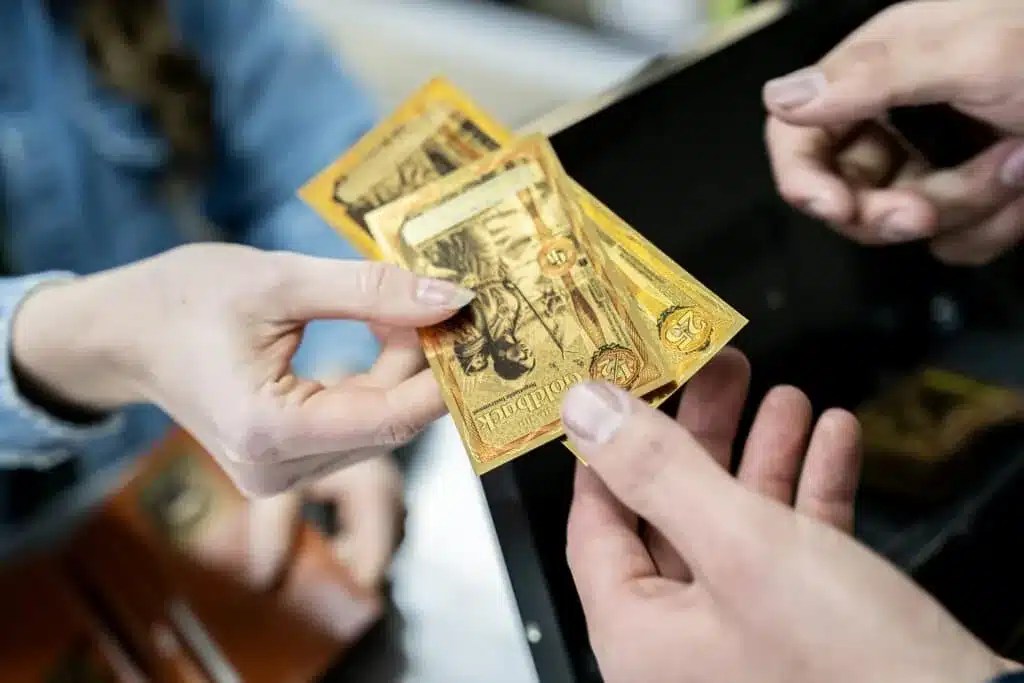
Want to see what owning gold without a token looks like in practice? Check the day's Goldback exchange rate, price a denomination with the Goldback calculator, find participating businesses on the pay with Goldbacks map, or locate an authorized distributor on the where to buy Goldbacks page.
Related Articles
- What Is a Gold-Backed Currency? — the category, its history and why it exists
- We Compared 10 Ways to Buy Gold — what each route into gold is actually for
- Goldbacks vs Gold Coins — the two side by side on premium and everyday use
- How Do Goldbacks Work? A Beginner's Guide — the mechanics behind the currency
Sources
- U.S. Securities and Exchange Commission — Crypto Asset Custody Basics for Retail Investors, Exercise Caution with Crypto Asset Securities
- Paxos — PAX Gold
- London Bullion Market Association — Precious Metal Accounts
- SPDR Gold Shares — GLD fund information, SPDR Gold Trust prospectus
- Commodity Futures Trading Commission — 10 Things to Ask Before Buying Physical Metals
- BullionVault — Allocated Gold
- Goldback — Frequently Asked Questions, Pay With Goldbacks, The Goldback Safe, Exchange Rates
Related Articles

Goldback Podcast Ep 10 Recap: The 8 Things We Learned About Nevada
In the tenth episode of The Goldback Podcast, …

“Swindling Futurity,” Thomas Jefferson’s Warning Still Rings True Today
This year, America celebrated 250 years since the …

Goldback Podcast Ep 9 Recap: Goldbacks Will Outperform Every Other Form of Gold in the Next Crisis
In the ninth episode of The Goldback Podcast, …
Gold-Backed Cryptocurrency Alternatives: Goldbacks and Other Ways to Own Gold
Quick Answer. The main gold-backed cryptocurrency alternatives are …
