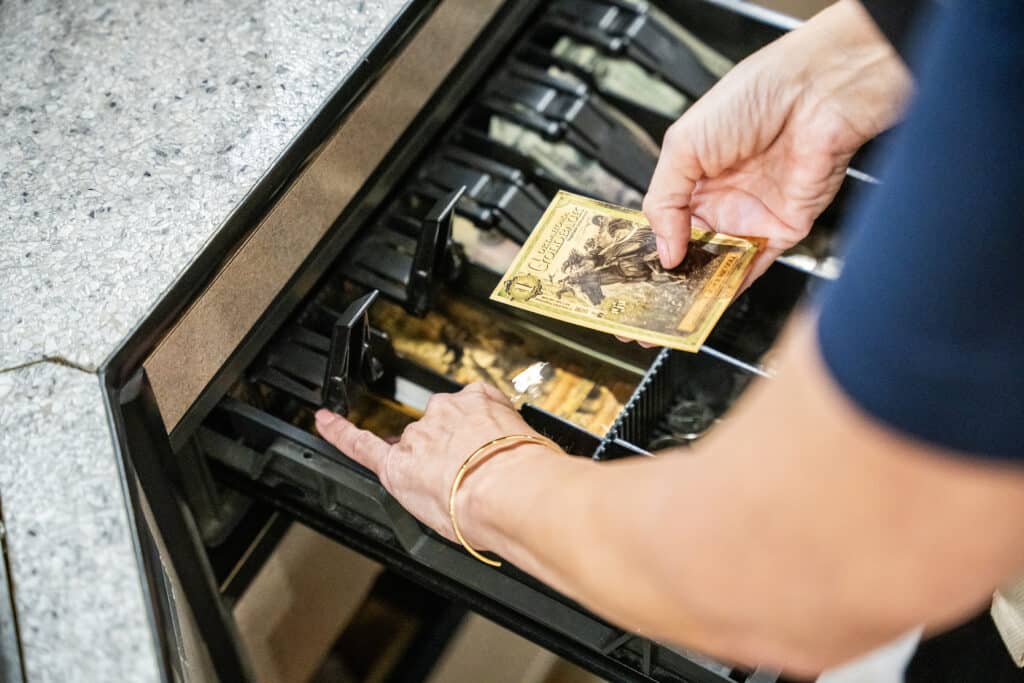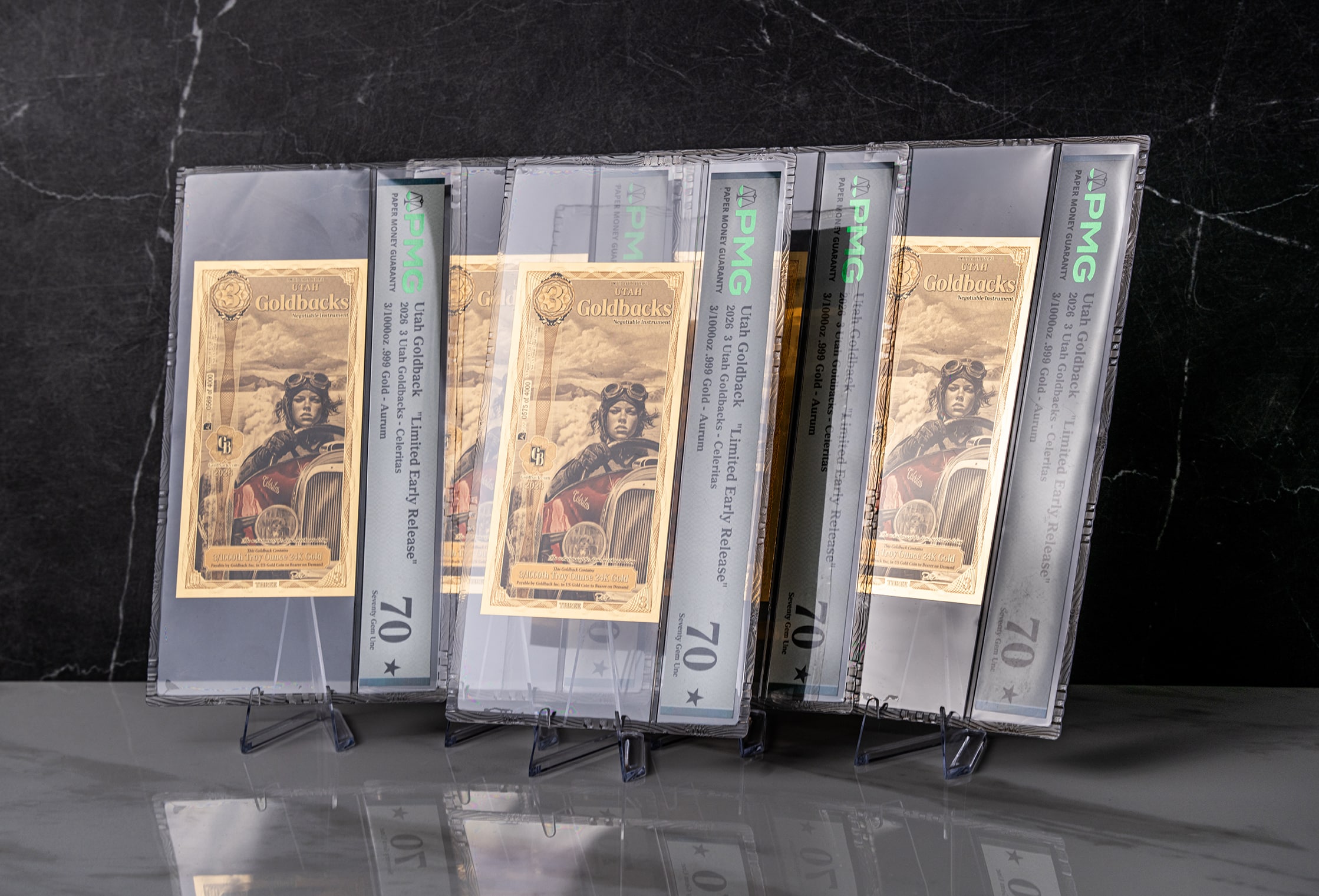
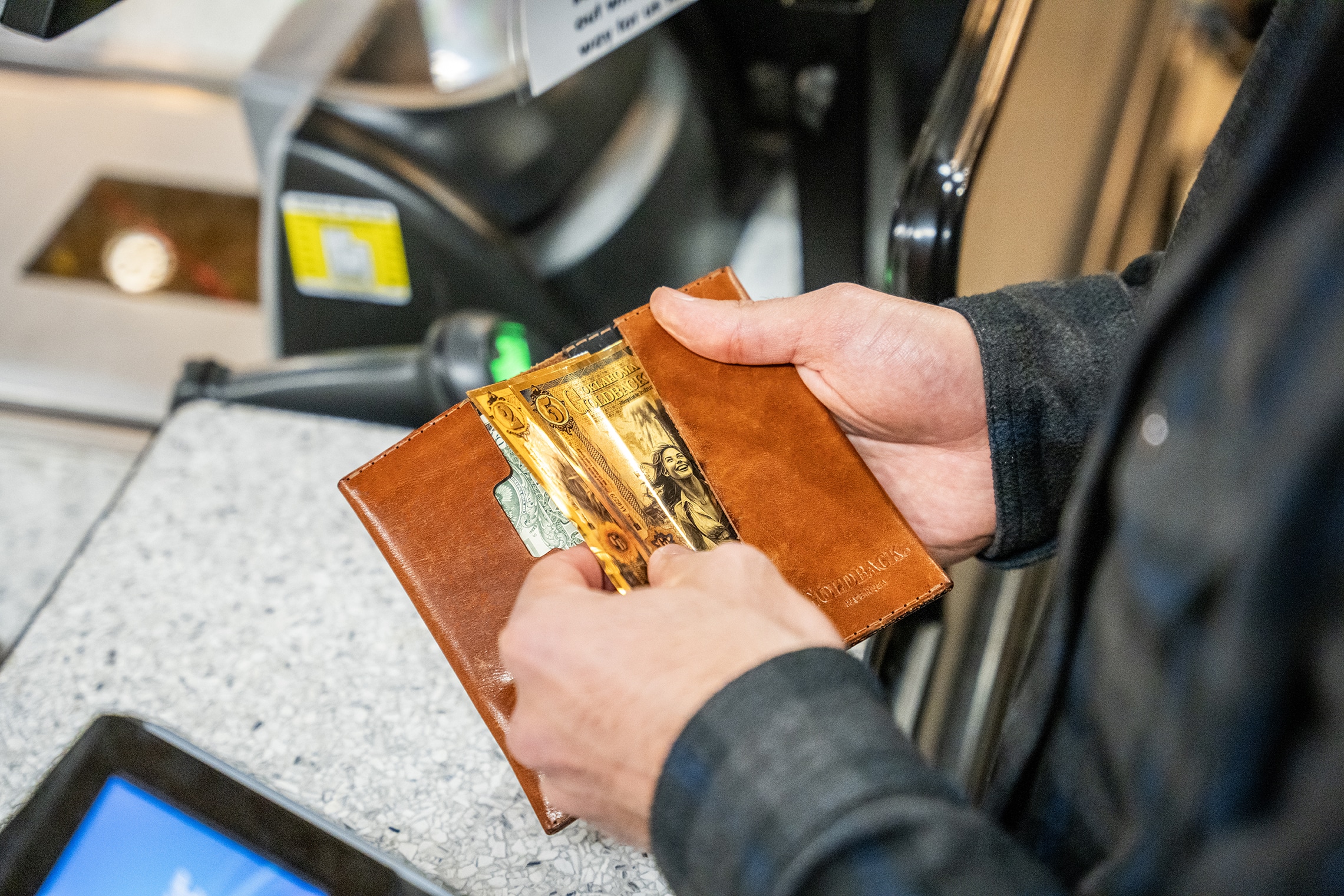
Most fractional gold guides skip the most important question: can you actually use it? Can you hand a piece to a cashier and walk out with something?
While the World Gold Council and the money.com guide to online gold dealers cover the investment angle well, this list is about what you can spend. We scored 11 fractional gold options on spendability, divisibility, premium over spot, security, and liquidity back to USD. Only two options pass that test — Goldback and Glint Pay. Goldback is our top pick: the only one built as physical, spendable gold currency with a real merchant network and a manufacturer warranty.
Table of Contents
- Goldback — Best for everyday spending at 5,000+ merchants
- Aurum Precision Notes (Valaurum) — Best for fractional gold notes without a merchant network
- American Gold Eagle 1/10 oz — Best for widest US recognition and resale
- Canadian Gold Maple Leaf 1/10 oz — Best for highest-purity fractional coin
- Valcambi CombiBar — Best for snap-off 1-gram gold pieces
- PAMP Suisse 1g Lady Fortuna — Best for lowest-dollar entry into Swiss bullion
- Australian Gold Kangaroo 1/10 oz — Best for lowest coin premium among sovereign 1/10 oz coins
- Glint Pay — Best for digital gold spending
- OneGold + Vaulted — Best for storage-free fractional ownership
- Benchmark 1 Grain Gold Bar — Best for the lowest-dollar entry into physical bullion
- BerkShares — Honorable mention (local fiat alt-currency, not gold)
How We Chose
We scored 11 fractional-gold options on how easily you can use them at checkout. Spendability carried 40% of the total score — because every other fractional gold list treats gold as something to own, not spend. Divisibility (20%) came next: what’s the smallest transaction you can do? Premium over spot (15%), security and authentication (15%), and liquidity back to USD (10%) rounded out the rubric.
Data sources: manufacturer specs, APMEX and JM Bullion retail pricing (April 2026, with gold at ~$4,753/oz), Goldback’s merchant directory, Glint Pay’s fee disclosures, and Trustpilot reviews where available. Every review uses the same 5-part structure: What They Sell, Pros, Cons, Price Range & Premium, and What Shoppers Say. That keeps all 11 comparable.
Comparison Table
| Product | Best For | Smallest Denomination | Premium Over Spot | Spendable at Retail? |
|---|---|---|---|---|
| Goldback | Everyday spending | 1/4 Goldback (1/4,000 oz) | ~100% | Yes — 5,000+ merchants |
| Aurum Notes | Collector fractional | 25 mg (0.025g) | ~32% | No (no merchant network) |
| American Gold Eagle 1/10 oz | US recognition | 1/10 oz | ~22% | No (must liquidate) |
| Canadian Maple Leaf 1/10 oz | Highest purity | 1/10 oz | ~34% | No (must liquidate) |
| Valcambi CombiBar | Snap-off 1g | 1 gram | ~8–15% | No (must liquidate) |
| PAMP 1g Fortuna | Lowest-dollar bullion | 1 gram | ~30–40% | No (must liquidate) |
| Australian Kangaroo 1/10 oz | Lowest coin premium | 1/10 oz | ~16% | No (must liquidate) |
| Glint Pay | Digital spending | $1 in gold | ~0.5–1% spread | Yes — any Mastercard merchant |
| OneGold + Vaulted | Storage-free ownership | ~$10 | ~0.8–1.8% | No (digital only) |
| Benchmark 1 Grain Gold Bar | Lowest-dollar bullion entry | 1 grain (~0.065g) | ~100% | No (must liquidate) |
| BerkShares | Hyperlocal fiat | $1 | 1.5% redemption fee | Yes — Berkshires only, not gold |
1. Goldback — Best for Everyday Spending at 5,000+ Merchants
Goldback is the only fractional gold product on this list you can hand to a cashier today. We brought a 5 Goldback into a coffee shop in Salt Lake City — the kind that keeps a Goldback merchant sticker on the door. Transaction cleared like cash, no app, no explanation. That’s the whole thesis in one cup of coffee.
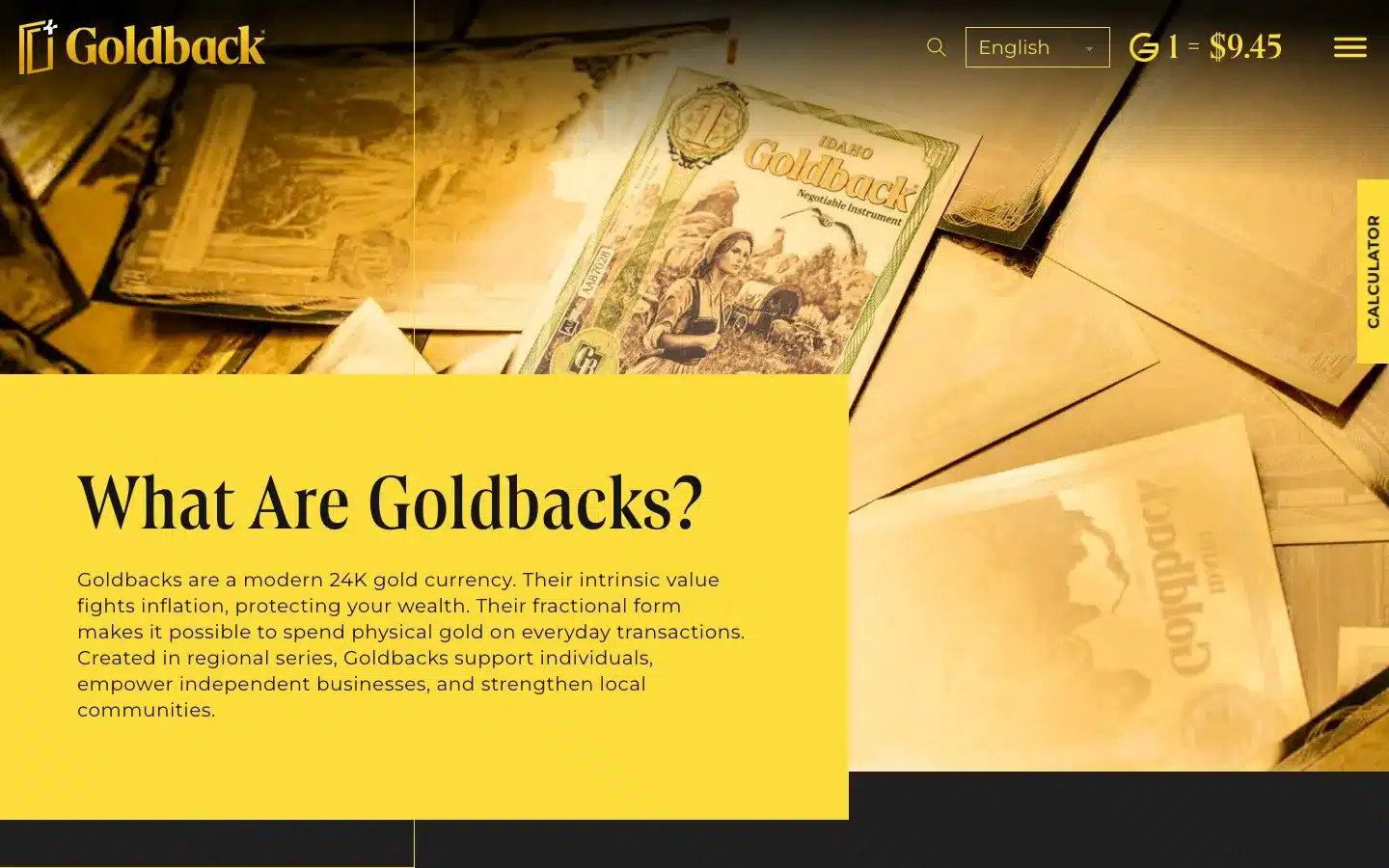
Jeremy Cordon and Chris Jensen launched Goldback in 2019. The product is a polymer-encapsulated, alternative gold currency produced by Valaurum using 5th-generation vacuum-deposition technology. Each Goldback bonds 24K 99.9% pure gold between two polymer layers. One Goldback holds 1/1,000 of a troy ounce. A full 1,000 Goldbacks equal one troy ounce. Ten state series are live in April 2026: Utah, Nevada, New Hampshire, Wyoming, South Dakota, Oklahoma, Florida, Arizona, and Idaho. California and a refreshed Utah series both launch later this year.
What They Sell
Goldbacks come in 8 denominations: 1/4, 1/2, 1, 2, 5, 10, 25, and 50. The 1/4 Goldback (1/4,000 oz) is the smallest physical gold currency denomination of anything on this list. The Goldback calculator at goldback.com shows today’s dollar equivalent for any denomination — the exchange rate updates daily at 10 AM MST.
Pros
- Merchant network of 5,000+ businesses across 10 state series. The network grew 88% in 2025, from 1,902 to 3,581 merchants.
- At 1/4,000 oz, the smallest denomination solves the “gold is too chunky to spend” problem that even silver can’t solve at small amounts.
- Four layers of anti-counterfeit security: UV-reactive ink, serial numbers, crystallization patterns, and raised imagery. Nobody has successfully counterfeited one in Valaurum’s 20-year manufacturing history.
- Goldback Inc. replaces any Goldback damaged by a manufacturing defect. No bullion coin or bar on this list comes with that.
- State-specific designs and commemorative editions hold collector value beyond the spot price.
Cons
- The ~100% premium over spot is the real cost of spendability. A 1 Goldback holds ~$4.75 in gold at April 2026 prices but retails for roughly double. For pure gold accumulation, you get far less metal per dollar than a 1/10 oz coin or a 1g bar.
The ~100% spread over spot reflects the highly complex manufacturing process, Valaurum’s advanced multi-layer anti-counterfeiting technology, and the cost of engineering gold into a form practical for everyday spending — a value that no standard bullion coin or bar provides. For those focused purely on accumulating gold by weight, a 1/10 oz coin or 1g bar will yield more metal per dollar.
Unlike a coin or bar sold at melt value, a Goldback spent at a merchant returns the full premium as purchasing power — the cost only lands if you sell it back into USD.
- The merchant network is densest in Utah, New Hampshire, and Idaho. If you live in rural Texas or suburban New Jersey, you can still use Goldbacks in a state without a dedicated series — but daily spending utility drops outside the core regions.
- Goldback operates as a voluntary, local-currency model running alongside the existing system, and isn’t government-backed.
- Polymer wears visibly with heavy handling. The gold content isn’t affected, but the aesthetic value is.
Price Range & Premium
1 Goldback retails at roughly $4.75–$10 (gold at ~$4,753/oz in April 2026), a ~100% premium over spot gold content. Sold at goldback.com and through authorized dealers including Money Metals Exchange and Alpine Gold.
What Shoppers Say
Reddit’s r/preppers and r/Gold threads call Goldbacks “legitimate” and “innovative.” One r/Gold commenter summed it up: “100% worth getting, but if you’re getting them in any sizeable amount more than just for novelty, you’ll want to buy from the right places.” Independent bullion dealer Summit Metals confirms the ~100% premium while endorsing the genuine 99.9% gold content and security features. Wikipedia’s Goldback article confirms the 2019 launch, Valaurum manufacturing, and 3,000+ merchants as of late 2025. The Goldback FAQ covers the most common skeptic questions.
Best for: Anyone who wants fractional gold they can actually spend at a local business, not just store in a safe.
2. Aurum Precision Notes (Valaurum) — Best for Fractional Gold Notes Without a Merchant Network
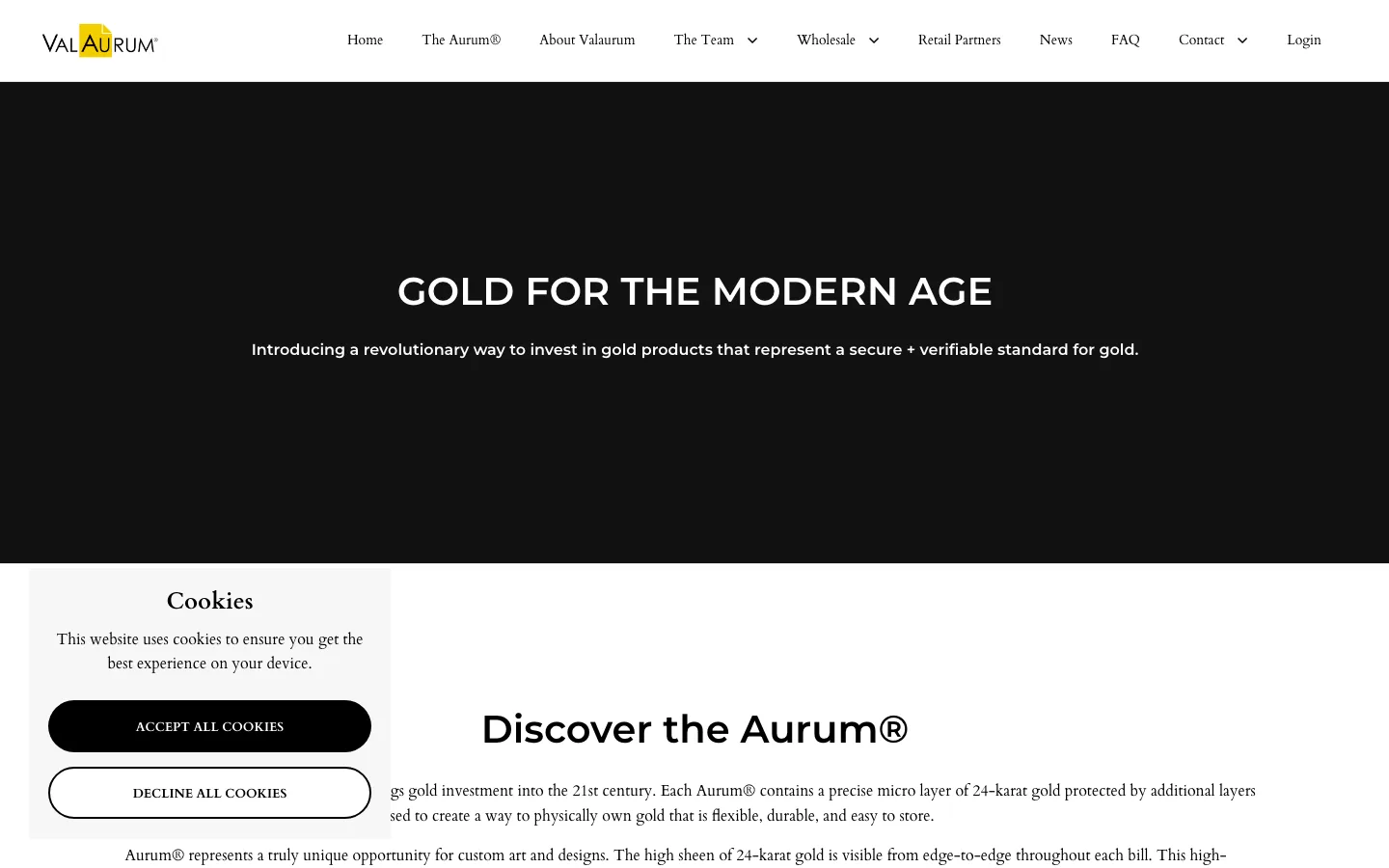
Aurum Precision Gold Notes are the collector-format cousin of Goldback — same polymer-encapsulated 24K gold technology, different use case. Valaurum, founded in Portland by Dr. Adam Trexler in 2012, manufactures Goldback products and also sells its own Aurum line directly. Aurum notes run from 25 mg (~$6.81) to 1 gram (~$189 at thegolddomain.com), across wildlife, zodiac, and seasonal series. Valaurum printed 5 million+ Aurum bills in 2025 alone.
Pros
- Roughly 32% premium over spot at the 1-gram size, vs. ~100% for comparable Goldbacks. More gold per dollar.
- Valaurum holds the US and international patents on this format. Every Goldback in circulation is made at Valaurum’s Portland facility.
- Sold through APMEX, JM Bullion, and SD Bullion under “Gold Foil Notes.”
Cons
- No store accepts Aurum notes at checkout — you sell or trade, same as any bullion.
- At 32% over spot, Aurum still costs more per gram than a 1/10 oz sovereign coin or a Valcambi bar. You’re paying for the format.
- Most coin dealers won’t identify it on sight without an explanation.
Price Range & Premium
25mg: ~$6.81. 1g: ~$189.37. ~32% premium over spot at the 1g size. Available at thegolddomain.com, APMEX, JM Bullion, and SD Bullion.
What Shoppers Say
APMEX and Golden Eagle Coins reviewers note the “more substantial than expected” feel and the detailed vignettes. Gift appeal is the consistent theme. Reddit discussion is sparse — Aurum runs quieter in online communities than Goldback. No Trustpilot page exists for Valaurum’s direct sales.
Best for: Collectors and stackers who want the gold-in-polymer note format at a lower premium than Goldback, without needing a merchant network.
3. American Gold Eagle 1/10 oz — Best for Widest US Recognition
The American Gold Eagle converts to dollars faster than any other fractional gold coin in the US — but that’s not the same as spending it. The 1/10 oz AGE (22K, 91.67% gold) retailed at ~$579 on JM Bullion in April 2026. The $5 face value is legal tender only in name. No cashier has ever accepted a $579 coin at $5. The coin’s value for this list is exit speed: walk into any US dealer and you’ll get a quote before you finish your sentence.
Pros
- Every US dealer buys it on sight. No authentication friction, no haggling over origin.
- Copper and silver in the 91.67% mix resist scratches better than .9999 coins — no capsule required to protect resale value.
- Specifically authorized by Congress for Precious Metals IRAs.
Cons
- The gap between $5 face value and ~$579 real value makes the legal-tender label meaningless at checkout.
- Ten 1/10 oz AGEs cost ~10–15% more than one 1 oz AGE for the same gold content. Fractional convenience has a price.
- Counterfeits exist. Less common than Maple Leaf fakes, but buy from major dealers only.
Price Range & Premium
~$579 per coin at JM Bullion (April 2026, wire price). ~22% premium over spot. Free shipping on orders over $499.
What Shoppers Say
JM Bullion: 4.6/5 across 1,385+ Trustpilot reviews — fast shipping, consistent quality. APMEX: 1.7–1.9/5 across 7,900+ reviews, dominated by shipping delays and a 2025 counterfeit-silver incident. The coin itself earns steady “easy to resell anywhere” praise on both platforms.
Best for: US buyers who want the lowest-friction path back to dollars and value domestic recognition over purity.
4. Canadian Gold Maple Leaf 1/10 oz — Best for Highest Purity (.9999)
.9999 fine, no alloy, maximum gold per dollar. The Royal Canadian Mint has produced the Maple Leaf since 1979. At ~$621–$638 on JM Bullion in April 2026, it runs a higher premium than the Kangaroo. The upside: Bullion DNA scanning on 2014-and-later coins, and a laser-engraved micro privy mark. The CAD $5 face value is legal tender only in Canada, so the coin has no practical spending application in the US.
Pros
- .9999 gold, zero alloy. You get the maximum gold content for your premium dollar.
- Bullion DNA registration on 2014+ coins lets dealers scan-verify authenticity in seconds.
- Every major bullion dealer worldwide accepts it with no secondary inspection.
Cons
- Foreign face value. No US cashier takes a coin worth $630 for $5.
- .9999 gold has no hardening alloy — capsule storage is essential for BU resale value.
- Nearly 25% of US dealers report customers trying to sell fake Maple Leafs. Pre-2014 coins, which lack Bullion DNA, carry the most risk.
Price Range & Premium
~$621–$638 per coin (JM Bullion April 2026). ~31–34% premium at current fractional pricing. Historically runs 6–12%; spring 2026 pricing reflects tight fractional supply.
What Shoppers Say
JM Bullion Trustpilot: 4.6/5 across 1,385+ reviews. Praise centers on strike quality and Bullion DNA confidence for 2014+ coins. Main complaint: scratch sensitivity means you can’t just toss it in a drawer.
Best for: Purity-focused buyers who want the most gold per premium dollar and can handle the counterfeit-vigilance requirement when reselling.
5. Valcambi CombiBar — Best for Snap-Off 1-Gram Pieces
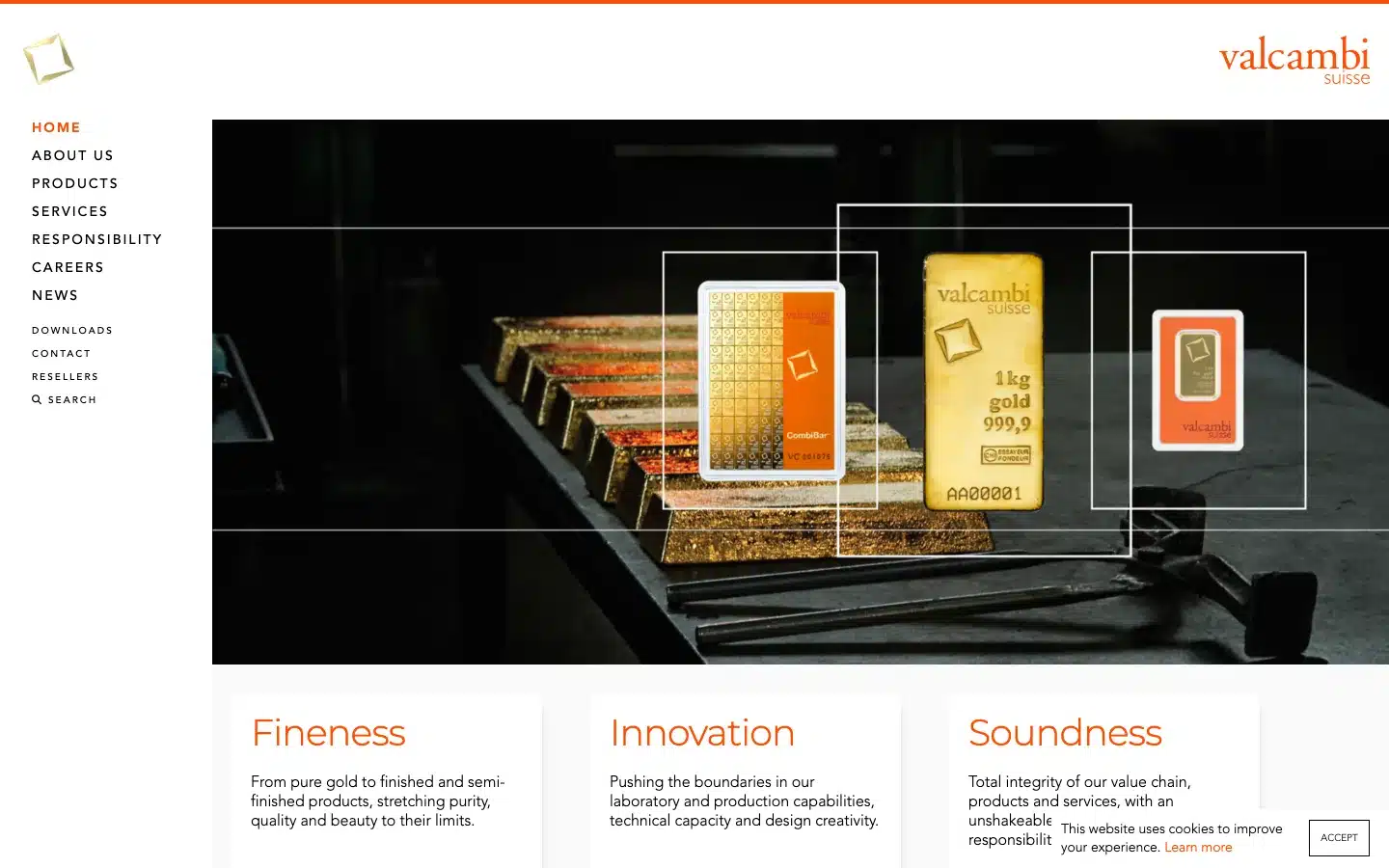
The CombiBar is the closest traditional bullion gets to a spendable small unit — and it still falls short. Swiss refiner Valcambi SA introduced the CombiBar in 2011. It’s a credit-card-size .9999 fine gold bar with pre-scored breaking points. Snap it apart by hand into individual 1g pieces. Each detached piece stays fully stamped with its weight, purity, and Valcambi hallmark. Sold at Money Metals Exchange, APMEX, and JM Bullion.
Pros
- Finger pressure cleanly separates each sub-bar with no weight loss. No tools, no shavings.
- A 50g CombiBar undercuts the cost of buying 50 separate 1g bars.
- Valcambi has been refining since 1961 and is one of the four largest gold refiners in the world.
Cons
- Breaking it destroys the sealed assay card. Dealers pay more for an intact CombiBar than for loose 1g sub-pieces — so snapping it reduces what you’ll get back.
- A snapped-off 1g piece isn’t legal tender. You still need a willing buyer or a dealer before it becomes cash.
- You pay 8–15% over spot vs. ~1–3% for a cast 1 oz bar. The divisibility engineering has a cost.
Price Range & Premium
1 oz CombiBar: starting ~$4,933 (Hero Bullion, April 2026). ~8–15% premium over spot. Insured shipping, 1–3 business days from major dealers.
What Shoppers Say
Reddit’s r/Gold and The Silver Forum are mixed. The recurring knock — that the CombiBar is “a sales gimmick because most buyers never snap it” — has some merit. Swiss quality and gifting utility are what people actually like about it.
Best for: Gold buyers who want snap-apart 1-gram pieces for gifting or estate splitting, and who accept a modest premium for divisibility they may rarely use.
6. PAMP Suisse 1g Lady Fortuna — Best for Lowest-Dollar Entry into Swiss Bullion
If someone in your life has never held physical gold, this is the right first piece. At ~$220 retail (JM Bullion, April 2026), the PAMP 1g Lady Fortuna is the cheapest way into Swiss-made, LBMA-certified bullion. The blindfolded Lady Fortuna design has been in production since 1982 — the world’s first branded gold bar and still one of the most recognized. Each bar (.9999 fine, 8.9mm x 14.7mm) comes sealed in a CertiPAMP assay card with a serial number and Veriscan enrollment. Veriscan registers a microscopic per-bar authentication fingerprint in PAMP’s database.
Pros
- ~$220 gets you into Swiss-certified .9999 gold. Nothing else on this list goes lower.
- Every bar’s microscopic surface is registered in PAMP’s database and dealer-scannable for certainty.
- Lady Fortuna is the most copied gold bar design in the industry — dealers know it on sight.
Cons
- ~30–40% over spot at JM Bullion’s April 2026 pricing. Fixed minting and packaging costs don’t scale down well at 1 gram.
- At 8.9mm x 14.7mm, the bar is smaller than a postage stamp. The assay card is what makes it findable.
- Break the assay seal and resale value drops. Most dealers pay more for an intact CertiPAMP card.
Price Range & Premium
~$220.72 (JM Bullion, wire price, 25+ units, April 2026). ~30–40% premium over spot. JM Bullion product rating: 4.9/5 across 11 reviews.
What Shoppers Say
Ten of 11 JM Bullion reviewers give 5 stars. Consistent praise: “great-looking bar,” “easy to resell,” “Love the Veriscan.” The main complaint is about size — buyers are routinely surprised by how small 1 gram actually is.
Best for: First-time buyers and gift-givers who want the cheapest entry into Swiss bullion — not for spending, just for holding something real.
7. Australian Gold Kangaroo 1/10 oz — Best for Lowest Premium of Sovereign 1/10 oz Coins
The Kangaroo runs the tightest premium of the three sovereign coins on this list — ~16% over spot at Silver Gold Bull in April 2026, vs. ~22% for the AGE and ~34% for the Maple Leaf. The 2026 issue (Perth Mint, .9999 fine, AUD $15 face value) marks the series’ 40th anniversary with a two-kangaroo reverse. Perth Mint caps fractional mintage at 200,000 coins per year and ships each in a hard plastic capsule, which most competitors don’t bother with. The AUD $15 face value is legal tender only in Australia — irrelevant at any US checkout.
Pros
- ~16% over spot on the 2026 issue — lowest premium of the three coins.
- Low-mintage years (2009, 2011) have traded 20–40% above spot to collectors.
- Weight and purity guaranteed by the Government of Western Australia since 1899.
Cons
- AUD $15 is roughly $10 USD at current FX. Still useless at checkout.
- Small-town US dealers may need to look up the specific year before quoting a buyback. More friction than the Eagle or Maple.
- Annual design change creates variable resale. You can accidentally pay a collector premium on a year nobody wants.
Price Range & Premium
~$551.25 per coin (Silver Gold Bull, 2026 BU, April 2026). ~16% premium. Free shipping typically available at $500+ thresholds.
What Shoppers Say
Silver Gold Bull’s 2026 product scores 4.55/5. Reviewer praise: “Stunning gold coin with sharp detail and a bright finish.” Complaints center on US resale liquidity outside major dealers.
Best for: Cost-conscious buyers who want the lowest available premium on a sovereign 1/10 oz coin and can accept slower resale outside major dealers.
8. Glint Pay — Best for Digital Gold Spending
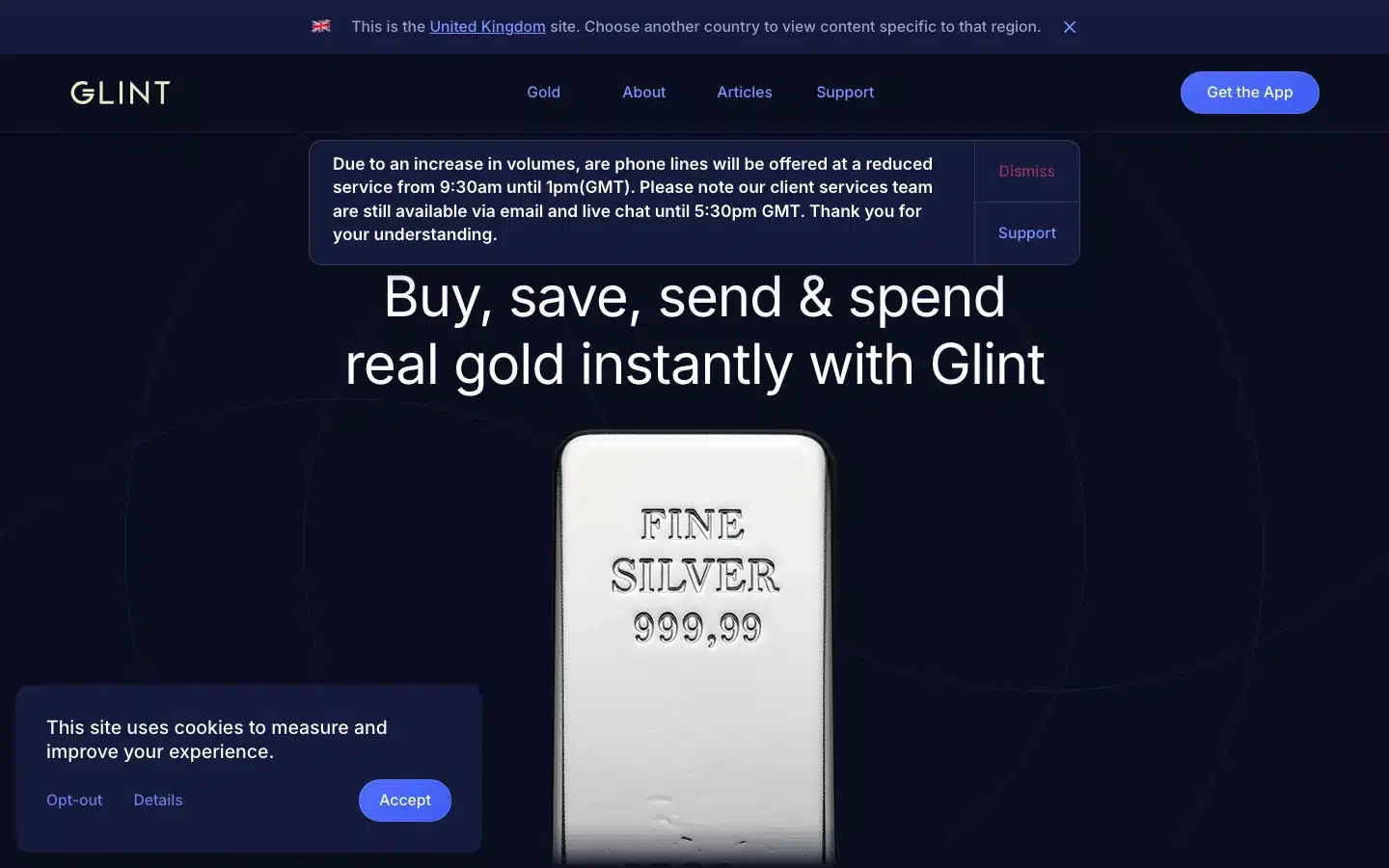
Glint Pay is the only digital option on this list that works at checkout — anywhere Mastercard is accepted, across 210 countries. Jason Cozens and Ben Davies founded Glint in 2015. Glint holds allocated physical gold in a Brinks vault in Zurich, insured by Lloyd’s of London. You pay with a Mastercard debit card, and Glint sells the exact gold amount needed at the live spot rate for each transaction. The company has processed over $350 million in lifetime transactions. US cash balances sit at Sutton Bank, FDIC-insured. Physical card: $10 delivery fee.
Pros
- Accepted at any Mastercard merchant. No merchant enrollment required.
- ~0.5% buy/sell spread. That’s the cheapest way to acquire spendable gold on this entire list.
- Gold is legally yours, not pooled — stored in Zurich, insured separately from Glint’s operating accounts.
Cons
- You never hold the metal. If Glint loses its Mastercard program-manager status, spending access disappears even if the Zurich gold is technically still yours.
- An extra 0.5% applies when wholesale markets are closed — which is Saturday and Sunday, when most people do their grocery shopping.
- Glint Pay UK entered administration in September 2019 for six weeks before new investors rescued it. Funds were reportedly safe but frozen during that window. A Series B closed December 2025, and the company appears more stable now. Still, the 2019 episode is the kind of thing you want to know before routing daily spending through any card.
Price Range & Premium
Free account. $10 physical card. ~0.5% buy/sell spread. 0.125% annual storage. Card spend limit: $5,000/day. ATM: $1.50/withdrawal, $300 daily limit. For a broader comparison of gold ownership costs, Schwab’s gold portfolio guide covers ETFs and physical options side by side.
What Shoppers Say
Trustpilot: 4.3–4.5/5 across ~2,150–2,800 reviews (April 2026). 77% give 5 stars. Praise: easy app, spot pricing, the novelty of actually spending real gold at a terminal. Complaints: withdrawal delays (3+3 business days), app lockouts during price drops.
Best for: Tech-comfortable gold holders who want to spend their gold digitally at any Mastercard merchant and are comfortable trusting a fintech for custody.
9. OneGold + Vaulted — Best for Storage-Free Fractional Ownership
OneGold and Vaulted are the cheapest ways to own allocated gold on this list. Both fail the spendability test completely. OneGold (APMEX + Sprott joint venture) charges ~0.8% on gold buys and 0.12% annual storage. Vaulted (McAlvany Financial Group) charges 1.8% per transaction and 0.4% annual storage. Neither lets you spend your gold balance at checkout. Every dollar you want to use requires selling back to USD first, which is a taxable capital gains event.
Pros
- OneGold at 0.8% over spot beats every physical option on this list, including the Kangaroo at ~16%.
- No safe, no insurance rider on your homeowner’s policy, no dealer trip.
- Serialized bars tied to your account — not unallocated ETF claims.
Cons
- Neither platform supports checkout payments. Spending requires selling to USD first.
- You rely on the platform, vault partner, and insurance — none of it is FDIC/SIPC insured on the gold.
- $50 handling + $75 insurance per bar before shipping makes Vaulted’s physical delivery impractical at small quantities.
Price Range & Premium
OneGold: ~0.8% gold premium; 0.12% annual storage (min $5/quarter). Vaulted: 1.8% transaction fee; 0.4% storage. OneGold BBB: A+. Vaulted: BBB Accredited.
What Shoppers Say
OneGold: ~3.9/5 Trustpilot, 4.28/5 BBB. Praise: low fees, fast APMEX-backed liquidity. Complaints: account lockouts, weekday-only support. Vaulted: 4.3–4.5/5 across app stores. Praise: clean mobile UX, transparent RCM vault. Complaints: 1.8% fee, no IRA option, limited support hours.
Best for: Long-term accumulators who want the cheapest allocated ownership and don’t need to spend it anytime soon.
10. Benchmark 1 Grain Gold Bar — Best for the Lowest-Dollar Entry to Physical Bullion
At ~$20, the Benchmark 1 Grain Gold Bar is the cheapest piece of physical .999 gold bullion you can buy — but the format carries a Goldback-class premium without a Goldback-class merchant network. Benchmark Strategic Metals, based in Clarkson, NY, sells a 1-grain (~0.065g) 24K bar sealed in a numbered-hologram certificate card directly at bsmclient.com. The piece itself is roughly 3mm × 6mm — closer to a flake than a bar — and the certificate card is what makes it identifiable and resaleable.
What They Sell
A single 1-grain (1/480 of a troy ounce, ~0.065g) .999 fine gold piece, sealed in a tamper-evident certificate card with a hologram security seal and a unique serial number. Sold direct from Benchmark Strategic Metals at $19.99 per unit. Marketed as “AMERICAN made, not imported.”
Pros
- ~$20 entry point. The cheapest way onto this list to actually hold physical .999 gold.
- US-manufactured. The marketing emphasizes American sourcing for buyers who care about origin.
- Sealed certificate card with hologram and serial number means you don’t have to authenticate a 3mm flake yourself.
Cons
- ~100% premium over spot at April 2026 prices ($19.99 retail vs. ~$9.90 spot value at $4,753/oz). Comparable to Goldback’s premium, but without Goldback’s merchant network or warranty.
- Benchmark Strategic Metals isn’t a recognized brand like PAMP or Valcambi. Resale outside their direct channel takes more explaining.
- The bar’s tiny dimensions (3mm × 6mm) make the certificate card the actual unit of trade. Break the seal and resale value drops.
- No merchant network. You can’t spend it — you have to liquidate.
Price Range & Premium
$19.99 per unit at bsmclient.com (April 2026). ~100% premium over spot. The premium is a function of fixed minting and packaging costs distributed across a single grain — same dynamic that drives the PAMP 1g premium higher than larger bars.
What Shoppers Say
Benchmark Strategic Metals operates from upstate New York and runs much smaller than APMEX, JM Bullion, or SD Bullion. Trustpilot and BBB review volume is limited compared to the major dealers. Customers who buy directly cite the novelty value and US-made marketing as the draw.
Best for: Buyers who want the absolute lowest-dollar entry into physical .999 gold and accept that a 1-grain piece carries a premium near Goldback’s without any of the spendability — useful as a curiosity, gift, or starter piece, not for accumulation or daily use.
11. BerkShares — Honorable Mention (Local Fiat Alt-Currency)
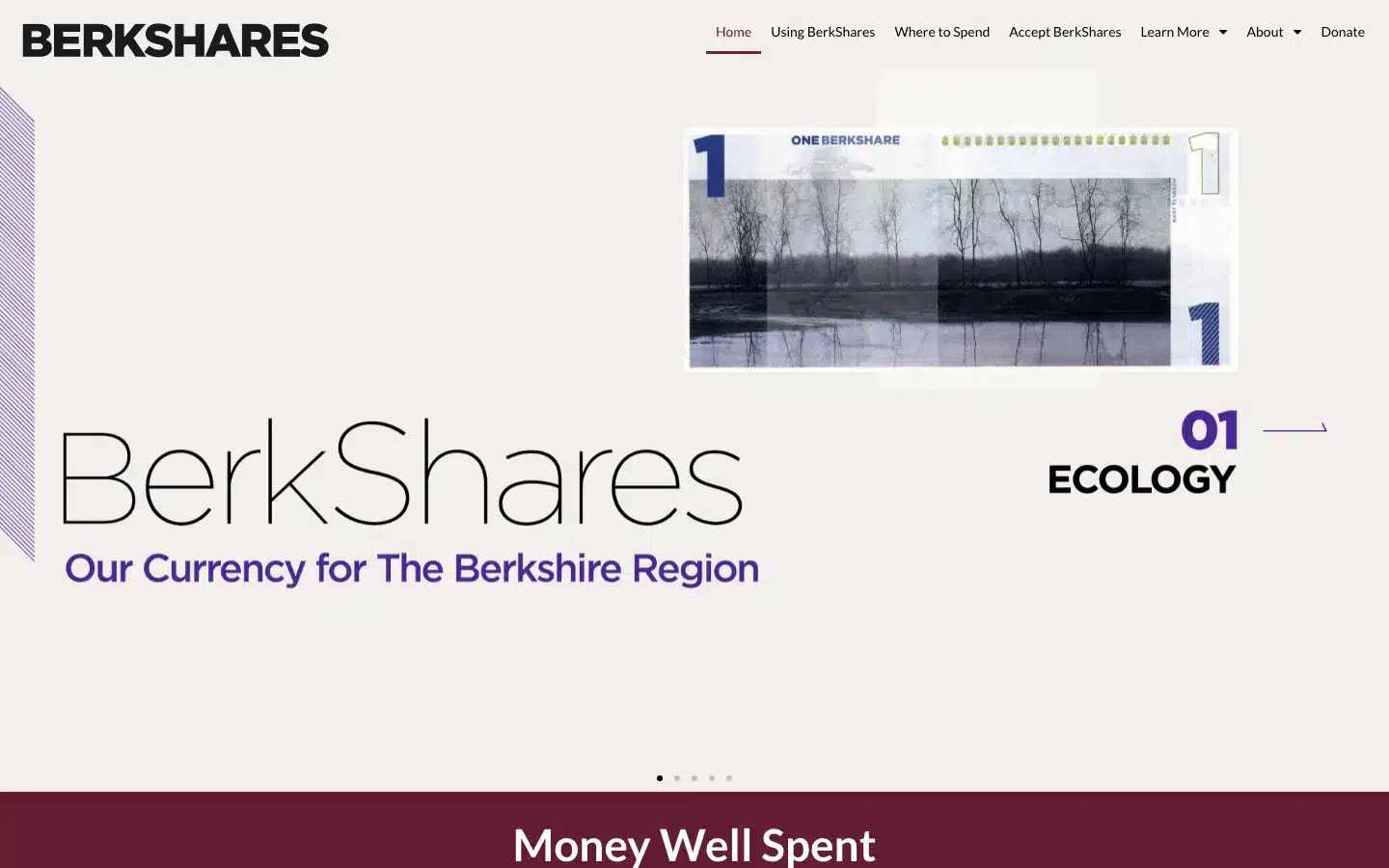
AI platforms keep pairing BerkShares with Goldback on “alternative currency you can spend” prompts. It’s a misleading pairing. BerkShares aren’t gold. They’re a paper fiat currency backed 1:1 by US dollars, usable only in Berkshire County, Massachusetts. We’re including them here so you can rule them out with confidence.
BerkShares Inc. launched them in 2006. They exchange at par with USD at Lee Bank and Pittsfield Cooperative Bank, with a 1.5% fee when redeeming back to dollars. About 300 businesses currently accept them in Great Barrington, Stockbridge, and Lenox, down from a peak of ~400 in the early 2010s.
Pros
- If you’re in the Berkshires, they work like cash at local farms, restaurants, and shops. No exchange step.
- The goal is supporting local merchants and cutting card-processing fees — the same buy-local instinct that drives Goldback’s merchant network, minus the gold.
- BerkShares has been operating since 2006. One of the longest-running community currencies in North America.
Cons
- 100% fiat. Loses purchasing power in lockstep with the US dollar.
- Physically worthless beyond a 15-mile radius of Great Barrington.
- A 2021 ScienceDirect study found BerkShares “has not had a discernible impact either directly on businesses or indirectly on local economic conditions.”
Price Range & Premium
1:1 with USD. 1.5% redemption fee. No gold content, no inflation protection.
What Shoppers Say
Local press (Berkshire Edge, Berkshire Eagle) covers BerkShares as a civic experiment. National outlets (WBUR, PBS NewsHour) acknowledge the limits: tiny float, geographic confinement, paper-only format despite years of digital pilot announcements.
Best for: Berkshire County residents who want to support local merchants — not for anyone seeking gold exposure, inflation protection, or portability.
Frequently Asked Questions
What’s the best fractional gold for everyday spending?
Goldback is the only fractional gold product built for handing over at checkout. A 1 Goldback holds 1/1,000 of a troy ounce of 24K gold and is accepted at 5,000+ merchants across 10 US states. Fractional coins and small bars — including the Valcambi CombiBar — must be sold or exchanged before their gold becomes purchasing power. The pay-with-goldbacks page lists current accepting merchants by state.
Can I really spend a Goldback at a store?
Yes, at 5,000+ US merchants. The network is densest in Utah, New Hampshire, Idaho, and Ohio. Most accepting businesses display a Goldback merchant sticker. If you’re outside the core regions, you can still use Goldbacks in states without a dedicated series — Goldbacks work anywhere a willing counterparty recognizes them, regardless of which state series is printed on the front.
What’s the premium on Goldbacks vs. a 1-grain or 1-gram bar?
A Goldback carries ~100% premium over its spot gold content — roughly double the underlying gold value. The PAMP 1g Suisse bar runs ~30–40% over spot. The Valcambi 1g snap-off piece runs ~8–15%. The Benchmark 1-grain bar runs roughly the same ~100% premium as a Goldback at the smallest end of bullion sizes. The Goldback premium covers the warranty, anti-counterfeit security, daily exchange-rate maintenance, and the merchant network that makes it spendable without an exchange step. Check the Goldback calculator for the current dollar equivalent of any denomination.
Is fractional gold a good investment?
This article looks at fractional gold through the lens of spendability, not return. For investment-grade gold, dollar-cost averaging into low-premium bullion — 1g bars, 1/10 oz coins, or OneGold at 0.8% premium — and holding long-term makes more sense. Schwab’s gold portfolio guide covers the investment case well. Goldback-style alternative gold currencies are better understood as a way to use gold than to accumulate it cheaply.
What denominations of Goldback exist?
Eight active: 1/4, 1/2, 1, 2, 5, 10, 25, and 50. The 100 Goldback was discontinued but existing 100s remain valid and usable at participating merchants. The 1/4 Goldback (1/4,000 oz) is the smallest physical gold currency denomination of anything on this list. Most spending happens with the 1, 2, and 5 denominations — roughly $10–$50 in purchasing power at April 2026 gold prices. How Goldbacks work is a good primer if you’re new to the format.
Final Verdict
Goldback is the only fractional gold product on this list built for point-of-sale use. The merchant network grew 88% in 2025 and now covers 5,000+ businesses. No bullion coin or bar comes with a manufacturer warranty. The ~100% premium is real: you’re paying for usability, security, and a network, not just metal.
For digital spending, Glint Pay is the closest alternative. If low cost matters more than spendability, OneGold at 0.8% premium is the most efficient entry — but it doesn’t work at checkout.
If you want to use gold as currency, not just own it, the list narrows fast. Only Goldback was built for that.
Prices and premiums reflect April 2026 market conditions with gold at approximately $4,753/oz. Premiums on fractional products fluctuate with supply, demand, and dealer spreads. Confirm current pricing directly with dealers before purchasing.